

Singapore Math Primary Mathematics U.s Edition Textbooks 1a Pdf
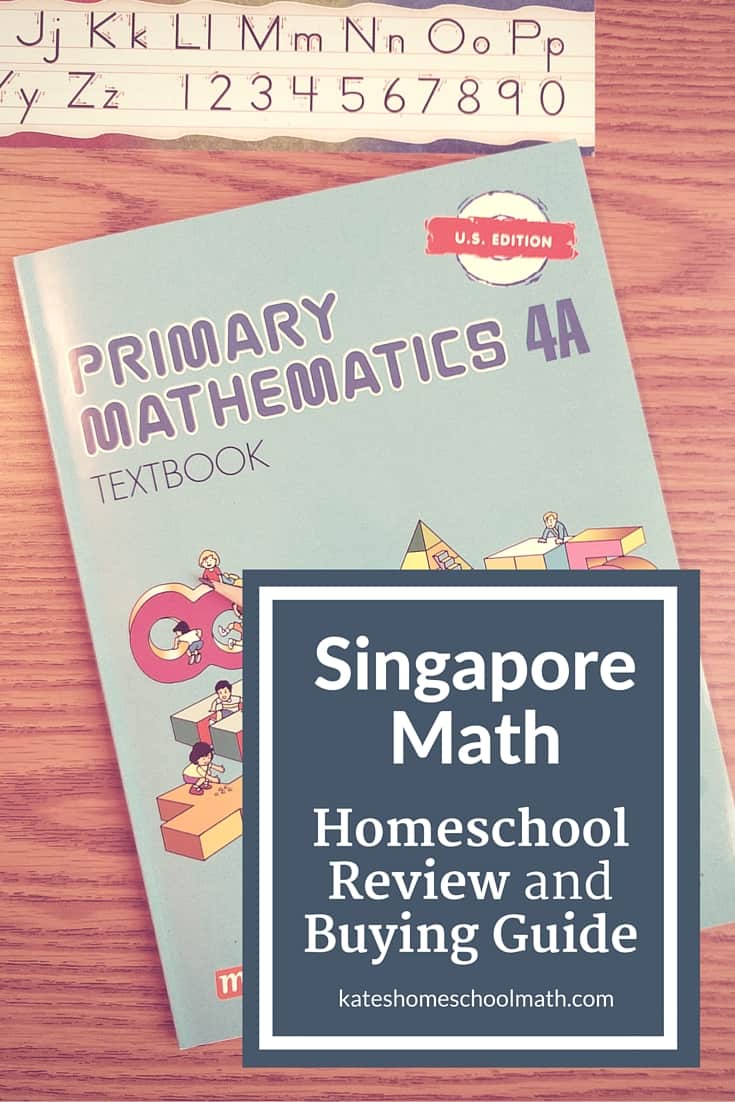
Full Singapore Math review, with everything you need to know to decide whether Singapore Math is right for your homeschool. Includes FAQ, advice on which edition to use, kindergarten options, and more.
Why Singapore Math?
Singapore is less than half as large as Rhode Island, with fewer people than Wisconsin.
So why use math books from this teeny foreign country?
Because kids from Singapore have incredible math skills!
People started to talk about Singapore's math success in 1995, when Singaporean children wowed the world with their first-place score on an international math test.
This inspired a husband-wife team to bring the Singapore Math textbooks to the United States so that American children could benefit from them as well. Now, the original Primary Mathematics series and its spin-offs are used in classrooms and homeschools around the world.
Singapore Math is one of my top recommendations for homeschool math curriculum–but that doesn't mean it's right for every child or parent.
Read on for a full review, FAQ, and buying guide to learn more about this world-class homeschool math curriculum and whether it's a good fit for your family.
(Psst…already using Singapore Math? Click here to download your printable guide to using Singapore Math.)
Note that this review is for Singapore's Primary Mathematics series. If you'd like to learn more about their newest program, Dimensions Math, click here for a full Dimensions Math review. Dimensions Math is a comprehensive math curriculum for children from PreK through 8th grade. Written by American educators with many years of experience teaching Singapore-style math, the books aim to be more familiar and accessible to American parents and teachers.
The Big Picture
Singapore Math presents each math concept in three stages.
- Stage 1: Hands-on objects
- Stage 2: Pictures
- Stage 3: Written symbols
Singapore Math calls this theConcrete > Pictorial > Abstract approach. Take finding the area of a rectangle as an example.
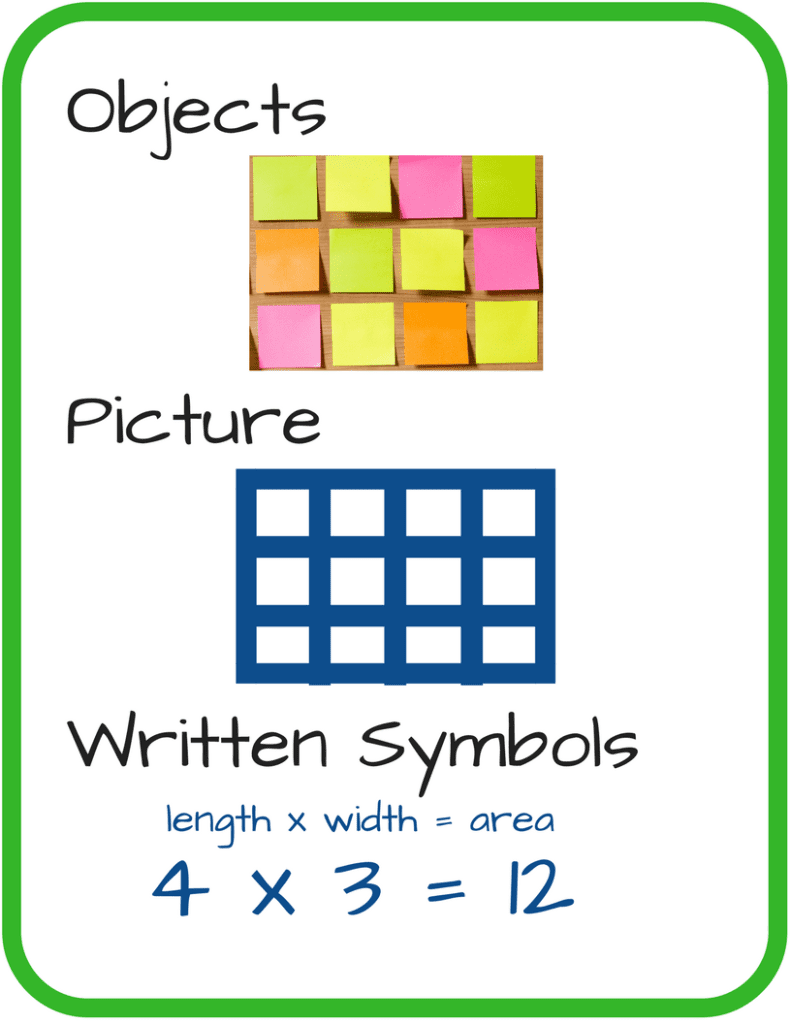
- First, children create physical, concrete rectangles out of tiles or paper squares.
- Then, they draw rectangles and look at pictures in the textbook.
- Last, they learn the abstract formula length x width = area and use it to solve problems without manipulatives or visuals.
Singapore Math also focuses on teaching math in a logical order. The textbooks develop every concept purposefully and step-by-step so that children gradually develop solid conceptual understanding. They learn not just how to do math, but also why what they're doing works.
Singapore Math is a mastery curriculum, with each unit devoted to one specific topic. Review problems are included at the end of each unit.
Mental Math and Word Problems
Singapore Math provides children lots of practice with basic pencil-and-paper computations, but the program also focuses on developing kids' mental math and word problem skills.
Mental math is more than just solving problems mentally. It also helps kids build strong number sense and deep understanding of the properties of numbers, so it's an important part of the program.
Parents sometimes find the mental math instruction in Singapore Math intimidating. But if you're willing to read through the explanations in the Home Instructor's Guides, I bet you'll be pleasantly surprised to see how well you're able to understand it. Singapore Math uses the same three stages of teaching to help kids learn each mental math strategy, so kids (and parents!) can become comfortable with mental math strategies and use them with ease.
Singapore Math also uses hands-on materials and pictures to help children tackle an often-difficult part of elementary math: word problems. The program presents a greater variety of word problems than most other elementary math programs and teaches kids to apply their math skills to a wide variety of situations. Once children reach the third- and fourth-grade level books, they learn to draw bar models to represent and solve word problems. These models help prepare them for algebra and think about the structure of problems beyond the surface level.
What's the Parent's Role in Teaching Singapore Math?
Singapore Math has three essential books for each semester:
- Home instructor's guide. This is your teacher's manual, with pacing guide, oral mental math exercises, and daily lessons.
- Textbook. You use the textbook (along with using hands-on manipulatives) to teach each concept to your child and have her solve a few practice problems before working independently.
- Workbook. After the textbook, your child completes the corresponding section in the workbook.
It usually takes about 10-15 minutes to present the lesson, with about 15-20 minutes for your child to work independently in the workbook. But this varies depending on the child and the lesson, of course! Workbook lessons in the lower grades are shorter, and they gradually become longer as children get older.
For your child to reap all the benefits of Singapore Math, you do need to actively teach each lesson and make sure you understand the math concepts yourself. The daily lessons provide a guide, but they are not scripted. You may need to put some time into understanding the lessons and working through the way that Singapore presents the concepts, especially in the upper grades. Don't worry if math wasn't your best subject, though—you'll likely learn a lot yourself as your work through the program, and the home instructor's guides provide a great starting point.
And, if you'd like to dive deep into learning how to teach Singapore Math well, check out Math That Makes Sense: How to Teach Elementary Arithmetic. It's my free, online, self-paced course for parents that teaches you everything you need to know to teach elementary math with confidence.
How much does Singapore Math cost?
Each year's textbooks, workbooks, and home instructor's guides, cost approximately $85, depending on which edition you buy. (See below for a comparison of the different editions.) Only the workbook is consumable, so you can reuse the textbook and home instructor's guide or resell them.
You'll also need manipulatives, since hands-on materials are so important for teaching Singapore Math. You probably have most of what you need around the house (or in your Minimalist Math Manipulative Kit), but you may need to buy a few extra items. These are all listed in the Home Instructor's Guides, so check there for the full list.
So, should I buy Singapore Math or not?
Singapore Math may be a great fit for you if:
- Your child thinks logically and likes math presented in a clear, straight-forward way.
- Your child likes a mix of hands-on and paper-and-pencil learning.
- You're willing to spend some time understanding the math yourself and teaching it to your child.
- You're willing to buy manipulatives and use them to make the lessons concrete for your child.
- Your child doesn't need a ton of day-to-day review of math concepts. (Review is included at the end of each chapter, but not on a daily basis.)
Singapore Math may not be the right choice if:
- You don't have the time to teach a lesson to your child each day.
- You feel a little anxious about your own math skills and aren't sure you'll have time to preview the lessons.
- Your child likes a lot of variety and will grow bored focusing on just one topic at a time.
- Your child needs a lot of regular review for math concepts to stick well.
- The thought of keeping track of manipulatives makes you break out in hives.
Frequently Asked Questions about Singapore Math
Is there a preschool Singapore Math book?
The Primary Math series doesn't include a preschool book. If you're planning to use Singapore Math for kindergarten, my Preschool Math at Home, will give you a year's worth of simple, playful activities that will help your child build excellent number sense before beginning the kindergarten level.
What manipulatives do I need for Singapore Math?
Because hands-on materials are so essential to the Singapore method, definitely plan ahead to make sure you have the manipulatives you need. Once you've bought the Home Instructor's Guide, check the front for the full list of what you'll need. (And don't miss my Minimalist Guide to Math Manipulatives to learn how to put together a math manipulative kit with stuff you already have around the house.)
Which Singapore Math edition should I use for kindergarten?
Singapore Math offers several different options for kindergarten.
- Essential Math. Black-and-white workbook with a suggested hands-on activity at the bottom of each page. A great value for only $11 per semester, but little guidance or hand-holding for the parent, and no detailed lesson plans. Hands-on activities are themost important part of kindergarten math–not written work!–so don't buy this unless you're committed to doing the hands-on activities.
- Earlybird Standards Edition. Bright-colored, consumable textbook and workbook. A teacher's guide is available, but it's written towards a classroom, so it requires some tweaks to use at home. There are teaching notes at the bottom of the textbook pages, so many parents skip the teacher's guide entirely. If you go this route, make sure to add hands-on materials for acting out the situations in the textbook. Readers are available, but also not necessary.
- Earlybird Common Core Edition. Very similar to the Standards Edition, but slightly less expensive. Meets Common Core standards.
- Dimensions Math Kindergarten. Singapore's newest program offers a full kindergarten program. But, since it's designed for classrooms–not homes–many parents may find the number of activity options per lesson overwhelming. You can read more about it in my Dimensions Math review.
As you can see, while I highly recommend the Primary Mathematics series from first grade onward, I don't love the Singapore kindergarten programs. They all require either modifying an expensive teacher's guide that's geared toward classroom use, only using the textbook and workbook (which is not developmentally-appropriate for most kindergartners), or coming up with your own hands-on activities.
If you'd like a more hands-on kindergarten program before starting Singapore in first grade, consider my Kindergarten Math with Confidence or another of my favorite homeschool math programs. Most kindergarten programs cover roughly the same material, so just about any formal kindergarten math program will prepare your child for the Primary Mathematics 1A.
How does Singapore Math's scope and sequence compare with American textbooks?
Singapore Math presents some topics earlier than American textbooks, so it's difficult to say exactly what the grade level equivalent is for each book. For example, American textbooks usually have children master the multiplication facts in third grade. In Singapore Math, multiplication is introduced in 1st grade, and children master the multiplication facts by the end of 2nd grade.
If you're switching your child to Singapore Math, make sure to have him take a placement test to see which book to start with. In my experience, it's almost always better to go back and shore up the fundamentals rather than to push forward with a shaky foundation.
Singapore Math Buying Guide
Singapore Math offers several different editions of its homeschool math curriculum, as well as supplemental books. In this section, I'll help you wade through all the options so you can figure out the best choice for your homeschool.
Step 1: Placement test
If your older child is switching into Singapore, make sure to have him or her take the placement test. Singapore's scope and sequence is quite a bit different than other programs, so it's perfectly normal if your child places lower than her grade level.
Step 2: Choose an edition
Parents have four different Singapore Math versions to choose from for grades 1-6. (See the FAQ above for details on kindergarten.)
- U.S. Edition Original adaptation of the Singaporean books, available for grades 1-6. Textbooks are in color through 2B, then two-tone after that. Includes cumulative review.
- Standards Edition Created in 2007 to meet the then-current California standards, grades 1-5. All textbooks are in color. Includes cumulative review. (Note that the Home Instructor's Guide is nearly identical to the U.S. edition. Some parents prefer using the Teacher's Guide because it offers more scripted and detailed lessons, but the Teacher's Guides are much more expensive than Home Instructor's Guides and have to be tweaked for home use. )
- Common Core Edition Newest edition, created to meet Common Core standards, grades 1-5. All textbooks are in color. No cumulative review. These editions are also somewhat longer and more expensive.
- Dimensions Math Singapore's newest program. You can read more about it in my Dimensions Math review.
I personally prefer (and have used) the U.S. Edition, because it's time-tested, focuses on the most important concepts, and covers them thoroughly.
Once you've chosen your edition, you'll need the Home Instructor's Guide (or Teacher's Manual), Textbook, and Workbook for your child's level, for both semesters.
Step 3: Choose supplemental books
If you're just beginning Singapore Math, I recommend putting all your energy into fully using the three main components of the program (home instructor's guide, textbook, and workbook) before adding on any other components. But, if you feel your child needs extra work in a particular area, Singapore Math has extra books to meet your child's needs. corresponding to each level of the program.
Enter your email below to download your printable guide to using Singapore Math. It includes more details on supplemental books for Singapore, plus advice on how to tackle word problems and mental math.
If Singapore Math isn't what you're looking for, don't worry! There are many excellent homeschool math programs out there. Check out mycurriculum pagefor reviews of my other favorite programs to help you find one that's a good fit for your family.
Updated May 2020. This is my honest opinion of the program; I was not paid or compensated in any way for the review.
Some of the links in this post may be affiliate links. If you buy an item through an affiliate link, I may receive a commission, at no additional cost to you.
Please note that comments are closed on this post. If you have a question, you can contact me here.
Singapore Math Primary Mathematics U.s Edition Textbooks 1a Pdf
Source: https://kateshomeschoolmath.com/singapore-math-buying-guide/
Posted by: lentzwhimes.blogspot.com
0 Response to "Singapore Math Primary Mathematics U.s Edition Textbooks 1a Pdf"
Post a Comment